Like The Prose 2021 – Day 8

Many writers of books and films choose to start their story near the end and then work backwards towards the beginning. I wrote a story that starts near the end, then uses a series of non-chronological flashbacks, taking us three weeks, fifty years, a hundred and fifty years and finally three hundred years back into the past, thus effectively ending at the chronological beginning. Again, I’ve chosen not to share this so I can try to publish it elsewhere.


Like The Prose 2021 – Day 7

For today’s challenge, I had to write a saj’. For those of you not familiar with the term, saj’ pieces are characterised by rhyme, with most, if not all, of the phrases ending with a perfect rhyme that is carried over variable lengths throughout the piece. You can find examples of saj’ in the Qur’an or in The Thousand and One Nights. According to Wikipedia, the ‘consistent, incessant rhyme is what makes the saj’ style so melodic and akin to cooing of birds and jingling bells.’

My piece tells the story of someone who meets an old man (presumably Sinbad, since the title refers to him) who is possessed by a Djinn. The storyteller kills the Djinn and the old man is restored to himself. He then tells the storyteller the tale of how he came to be possessed by the Djinn.

If I had time to do this properly, I would vary the lengths of my lines in keeping with traditional saj’; as it is, I’ve stuck to iambic pentameter since this mimics natural speech rhythms – the rhyme and rhythm are present here, but to do the saj’ form justice, I’d have to spend a lot longer.

The Seventh Saj’ of Sinbad

I met a traveller from an ancient land:

Careworn was he, and frail of limb and hand;

With stooping back, he found it hard to stand,

Yet he had travelled far across the sand.

Across the sand, he’d come for many days

‘Neath fiery sun, his skin tanned by its rays.

He had a tale, he said, that should amaze:

He’d tell me of the Djinn and all their ways.

Indeed, he told me of a Djinn so tall,

So fierce, so ravenous it made me pall.

This Djinn, he said, would answer to his call.

But then, alas! I saw my traveller fall.

I saw my traveller fall as falls a tree

When woodsmen cut it down. How could this be?

For lo! upon his face now plain to see

The features of a Djinn stared back at me.

‘O, mortal man, free me!’ the Djinn now roared.

His eyes blazed fire; his birdlike talons clawed.

I pierced his demon-visage with my sword

And then, like that, the traveller was restored.

‘How came this transformation?’ I enquired.

For now my curiosity was fired.

‘By what strange fate were you and he so mired?

How in your skin was such a one attired?’

The traveller sighed and thus began his song,

And strange it was, and plaintive too, and long.

‘In all my years – they number thirteen score –

I’d dealt with Djinns and faerie folk galore –

Until the day came when I finally swore

I’d take a wife and travel thus no more.

So, take a wife I did, a beauteous mate

With almond eyes and lips as sweet as dates.

But Heaven frowned, and by some twist of fate,

Her love for me did swiftly turn to hate.

Love turned to hate – I was not what she sought;

And though I gave her everything I ought,

She spurned my gifts and said love is not bought,

And thus her anger flared and our love came to naught.

She left me in the night and ran away

So far across the desert, far away.

Upon a camel’s back she chose to sway.

I could not stop her flight nor make her stay.

An empty shell was I without my wife.

I did not eat nor sleep; I tired of life.

And though her nagging words oft gave me strife,

Her going pierced my heart like cruellest knife.

‘Twas then the Djinn whom you have late despatched

Revealed at length the plan that he had hatched:

His soul with human body would be matched…

“But that’s absurd!” I cried, and anger flashed

Within his eyes, and then his teeth he gnashed,

And thought I to myself I would be dashed

Upon the rocks for doubting his fine plans

Or buried in a bottle in the sands.

Instead, he let me live, but stole my shell

And while he lived, I was in living hell.

One body with two spirits walked the earth

Until the demon’s death gave me new worth.’

O, he had travelled much and suffered more!

His tale of woe now shook me to my core

For everyone might one day meet a Djinn

And grief can be a door to let him in.

Like The Prose 2021 – Day 6

Write a love story, they said, but don’t be afraid to be subversive. Oh, but do make sure it has a happy ending.

Over the past couple of years, I’ve written a lot of love stories: some have ended happily; others not so happily. This time, I wanted to challenge myself to do something I hadn’t done before, so I decided to set my story in a circus – a Victorian circus. These days, we’re all very aware of equal opportunities and accepting people’s differences, but the Victorians saw things quite differently. ‘Freak shows’ abounded in which anyone who didn’t quite fit society’s perception of ‘normal’ was branded an outsider – whether it was for being too tall, too short, too hairy, or having any kind of physical disability. In my story, the protagonist is the outsider by virtue of being the only person in the circus who isn’t considered a ‘freak’ by the rest of society. He despairs of ever finding love in a world where being ‘normal’ is seen in a negative light.

This story has been temporarily removed as I’ve decided to edit it and enter it into a competition.

Like The Prose 2021 – Day 5

Today’s challenge combines travel writing with historical fiction. Whereas yesterday’s story incorporated real places and factual information about my chosen location, today’s invents a tourist attraction and gives the fictional backstory to it.

Elf Wood


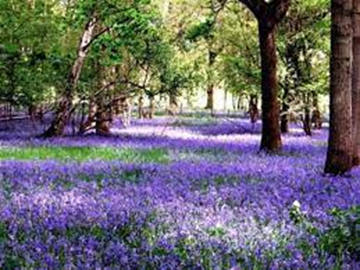
Several years ago, I was out walking my dog when I stumbled across a hidden wood only a couple of miles from the centre of Birmingham. How I’d managed to miss this before, I didn’t know, but the place was beautiful: a carpet of bluebells stretched as far as the eye could see and there was a general feeling of tranquility and wellbeing as soon as I set foot amongst the trees. Walking past elm and birch, poplar and oak, it felt as if I’d been transported into a Tolkienesque world: I almost expected to see elves and hobbits peeping at me from behind leafy branches.
Wanting to visit this magical world again, I made a note on my phone of where it was. I’m not famed for my sense of direction, but Google Maps has proved pretty infallible so far.
Only, it turned out it wasn’t as infallible as I’d thought. The following weekend, dog in tow, I checked my map app and headed for Cotteridge’s answer to Lothlorien. It wasn’t there.
At first, I thought it was just the app playing up, but after searching for over an hour, I had to admit defeat. The dog thought his extended walk was wonderful whereas I just wanted to find the spot that had induced such a feeling of calm and rightness.
I asked around, but none of my friends seemed to know what I was talking about. That, I thought, was the end of it – until a random Instagram post by a friend in Cornwall caused me to think again. Amidst photos of clifftop scenery and crowded beaches, a familiar scene caught my eye. That was my hidden wood – but how had Jen found it, and what had she been doing in Birmingham?
I left a comment on her post to the effect of she should have let me know she’d been in my neck of the woods (I was proud of the pun) and could she remind me exactly where this spot was located. Her answer appeared an hour or two later, claiming confusion as this was a wood she and a friend had discovered whilst walking near Bodmin. “I’m not exactly sure where it was,” she wrote. “I’ve been back to look for it since but couldn’t find it.
Even then, I might have chalked the whole thing up to coincidence – after all, one bluebell wood looks much like another – had it not been for a third photo, identical to the ones Jen and I had taken, which popped up on a Facebook feed from someone holidaying in Yorkshire. Despite their diverse locations, all three had something in common: the person who’d taken the photo had never been able to find the spot again.
It was at this point that something tugged at my memory. Hadn’t there been a documentary on TV a while ago about a wood that seemed to vanish and reappear at will? A Google search uncovered at least a hundred YouTube links – some relating to the programme I vaguely remembered watching and others that showed people talking to the camera about their own experiences of ‘Elf Wood’ as some of them had named it. Most of the personal vlogs were pretty standard: people who were so desperate to be famous that they would have claimed anything if they thought it would get them more likes. I discounted anything supernatural or downright weird, thinking that you were always bound to get a few nut jobs with something like this, and then turned my attention to the clips from the TV programme, trying to sift through them to find the ones with the best quality.
I hadn’t been far off the mark when I called the wood ‘Tolkienesque’: it turns out old JRR himself had discovered Elf Wood as a boy, shortly after moving to Sarehole in 1896. Part of the documentary featured the narrator reading out bits from Tolkien’s personal diaries where he described his memories of being taken on a walk at the age of 5 or 6 and finding himself in a magical fairyland. “At the time, I thought I had stumbled into a less disturbing version of Alice’s Wonderland,” he wrote, “and although I went back time and time again to recapture the delight I felt, somehow the precise location of the wood eluded me, so that after a few years, I began to wonder whether it had actually existed or been just a figment of my childish imagination.” Another clip suggested that when Tolkien came to write The Lord of the Rings many years later, he had had modelled the elves’ woodland realm on this unknown location. There was also a strong possibility that it might have been the inspiration for Alan Lee’s paintings in illustrated copies of the book – paintings which had then been used as a guide for the sets in Peter Jackson’s well known film trilogy.  
Since then, I’ve found myself obsessively researching bluebell woods, fairy woods, vanishing woods and just about anything else that might possibly be something to do with the place I discovered by chance and haven’t seen again. Familiar-looking photos pop up on social media with great regularity, and the given location is different every time. From what I can tell, it’s mentioned in countless local records as far back as the 1530s, so it’s been casting its spell on those who find it for centuries.
I’ve resigned myself now to the knowledge that I’ll probably never find it again. ‘Elf Wood’, as I’ve come to think of it, isn’t the sort of place you can visit twice. What’s more, I think I always knew there was something otherworldly about the experience because the ground was carpeted with bluebells and yet I discovered it in the middle of winter.

This image has an empty alt attribute; its file name is image-32.png


Like The Prose 2021 – Day 4

Today’s prompt was to write a travel narrative. I was lucky enough to visit Iceland twenty years ago and we had an amazing guide who not only took us to places of interest but also filled us in on Icelandic folklore during our journeys to these different places. The story I wrote today combines my memories of that trip with the narrative of a woman who is trying to fulfil a promise to her husband. I haven’t shared it as I’m wanting to publish it elsewhere.

Like The Prose 2021 Day 3

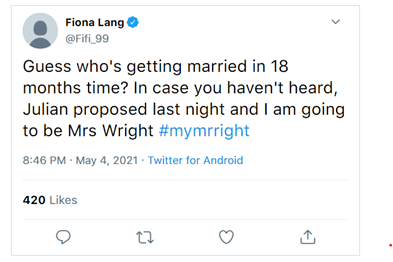
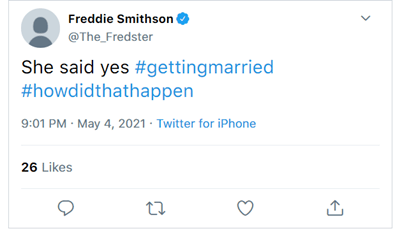
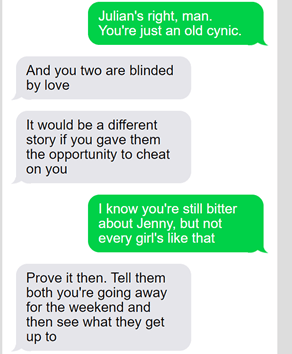
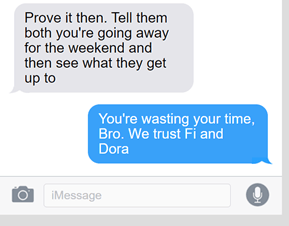
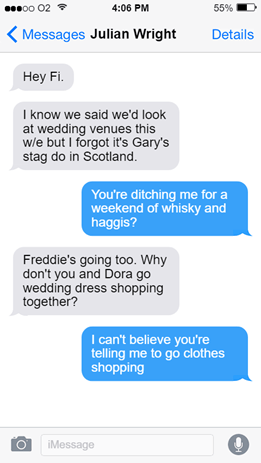
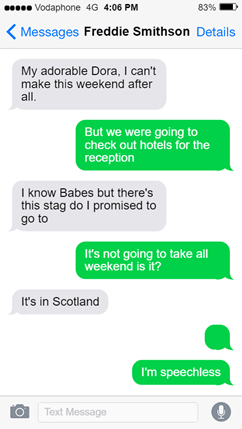
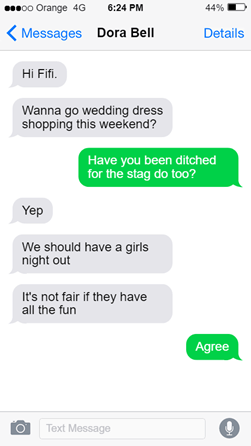
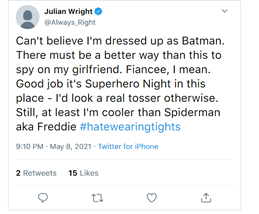
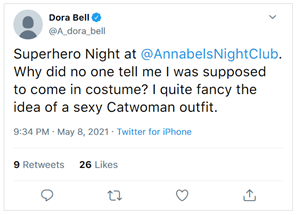
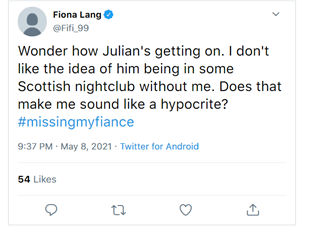
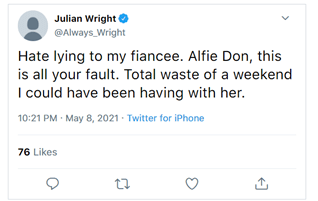
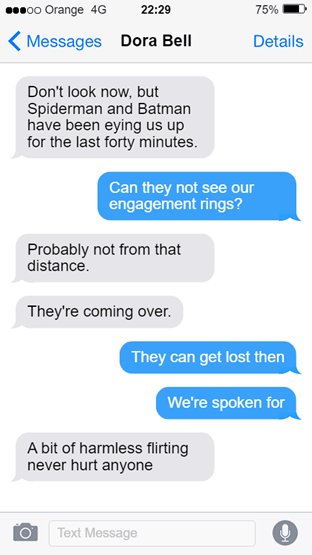
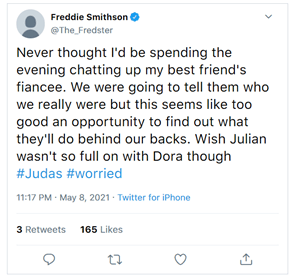
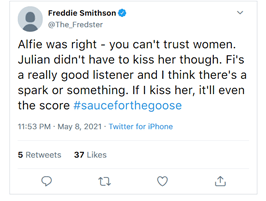
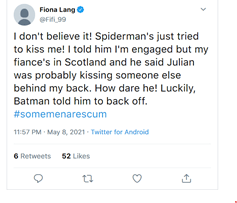
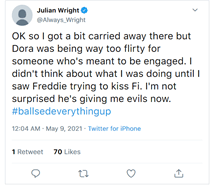
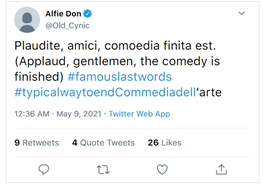
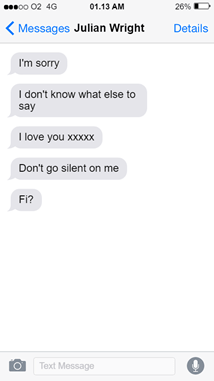
As an English teacher, I know that many teenagers today don’t read much apart from reading texts and tweets and other messages on social media. Today’s challenge was to create a story in bite sized chunks but I thought I would combine the format of social media with one of Mozart’s well-loved operas, Cosi Fan Tutte. The storyline is surprisingly relevant in 2021 – it’s basically a catfishing scam in which two young men decide to test their fiancées’ fidelity by going away from them and then returning secretly in disguise to woo each other’s lover – if they can. Mozart’s opera ends happily, but I’ve left my story on an ambiguous note. If you would like to find out more about the original opera, click here Così fan tutte – Wikipedia

Cosi Fan Tweety

Like The Prose 2021: Day 1

For anyone who hasn’t logged in before, Like The Prose is an annual writing competition which involves receiving a writing prompt each day in June and having 36 hours to write and submit a story. I took part for the first time in 2019 and it was a great way to make me step out of my comfort zone and tackle themes and genres I hadn’t thought of before. Last year, I took part again and was pleased to finish the challenge for the second year running with thirty new stories written in thirty days. I also signed up to the Facebook group for LTP and had the privilege of reading others’ submissions as well as making new friends who also love writing – and this led to a number of us contributing stories to an anthology of thirty stories written during Like The Prose.

I’m now back for a third year and happy to see lots of familiar faces taking part once more. Our first prompt arrived last night and, as in previous years, I’m posting my written responses on this blog each day in June. The short story below is based around the theme of waiting. I had all sorts of ideas such as someone waiting for the right moment to propose, waiting to kiss someone for the first time, waiting for the phone to ring, or waiting in a hospital to see if a loved one would survive – but one of the competition rules is that all stories must be new and I’d already written stories on all of these themes within the past year (you can find them on the Reedsy website) so knew I’d have to do something different. So, this first prompt is a bit of a first for me as I’ve abandoned my usual genres to write something a little more surreal as the characters in my story wait for a strange supernatural being called Jimli…

Waiting for Jimli

“Are you sure your family wants me around at a time like this?” Eric whispered.

Milena stopped adjusting her golden plaits just long enough to fix him with a hard stare. “It is the Czech custom,” she intoned. “My family would think it rude if you were not here with us to wait for Jimli.”

Eric still wasn’t sure he understood this bizarre ritual. From what he could make out, no one expected Milena’s grandmother to last out the night – but instead of a few family members sitting quietly by her bedside, it seemed as if half the village had turned out to watch as the old woman waited for some kind of spirit to appear at her bedside and tell her it was time to leave the mortal world. He’d seen some strange customs during the three or four months he’d been living in Lukov – it was only six miles away from the pickled cucumber business in Znojmo that was in the process of being taken over by Eric’s UK condiments company and it had been easier to find accommodation here – but when his work colleague, Milena, had invited him to a ‘party’, this hadn’t been what he had in mind.

“Remind me again what Jimli’s like,” he said now. Was he like the Angel of Death? Or perhaps he was more like Charon, the ferryman whom the ancient Greeks believed had taken the souls of the recently departed across the River Styx to the land of the dead.

Milena seemed amazed by his ignorance. “Jimli is many things,” she began. “He has one hundred relatives and they are all his father. He eats his hatchlings, and then he weeps over his greed. His carriage is drawn by ten fat slugs and so the hour of death comes slowly.”

She was mad, Eric thought. Quite mad.

“But we must all wait for Jimli,” she continued, “whether we are young or old. If Jimli does not see us waiting, he will hunt us down and steal our breath while we sleep.” She lowered her voice still further. “Every night, when we go to sleep, there is a kouzlo we must recite: one that will ward off evil yet let Jimli know he is welcome. If he knows he is welcome, he will not trouble the sleeper.”

“What does he do to people who forget to say the words?” He didn’t believe any of Milena’s story, of course: it was superstitious nonsense; but a part of him needed to know.

“Jimli will enter through the window and then he will find the sleeper’s bed…” Milena’s voice was hypnotic and slow. “And he will place his heavy hand on the sleeper’s shoulder and shake the sleeper to wake him up. And the sleeper’s eyes will open but at the same moment, his blood will freeze in his veins and he will be one of the mrtvoly: the living corpses who have no place in heaven or in hell but must wander the streets of memory for thousands of years until they turn into dust.”

She was absolutely bonkers – they all were. Well, he wasn’t going to sit around waiting for Jimli all night: he was going home now.

Stifling a yawn, he turned to Milena. “I’m sorry I can’t stay all night. I’ve got an early morning presentation tomorrow – it’s the new packaging for the pickled cucumbers.” He yawned again. “Anyway, I’ll need a decent night’s sleep…”

But it looked as if he would be staying after all, for a wave of fatigue suddenly overwhelmed him and he found himself sinking back down onto the sofa and closing his eyes. If he could just doze for a few minutes, he should be okay, but sleep was seeping through his entire body.

“You do not know the words of the kouzlo.” Milena’s voice echoed in his subconscious. “When Jimli comes, you will be unprepared.”

“Jimli’s not coming,” he muttered in his sleep. “He’s just a figment of people’s imagination.”

And that was when a heavy hand fell on his shoulder…

*

He came to with a start, opening his eyes to find a strange man shaking him. “Did you arrive on flight JML1? I have been entrusted with meeting an Englishman named Hopwood who will be working with my company.”

For a moment, he blinked in surprise, and then it all came back to him. He was in the Czech republic. He’d been sent here to oversee the new business merger with a pickled cucumber business in Znojmo.

“Thanks,” he said as he rose to his feet. “I didn’t mean to drop off like that. It must be jet lag.” His new colleague was still staring at him, so he held out his hand. “My name’s Eric. And you’re…”

 The man smiled. “Just call me Jimli.”

NaPoWriMo 2021 – Day 9

The (optional) prompt given for today was to write a poem in the form of a “to-do list” but to choose an unusual person or character. For example, what’s on the Tooth Fairy’s to-do list? Or on the to-do list of Genghis Khan? Of a housefly? Your list can be a mix of extremely boring things and wild things. For example, maybe Santa Claus needs to order his elves to make 7 million animatronic Baby Yoda dolls, to have his hat dry-cleaned to get off all the soot it picked up last December, and to get his head electrician to change out the sparkplugs on Rudolph’s nose.

I’ve chosen one of my favourite Shakespearean villains: Iago, from the play ‘Othello’. Iago is a wonderfully Machiavellian creature, always plotting and scheming to bring others down. If you ever get the chance to see the 1995 Kenneth Branagh film version in which Branagh himself plays Iago, he conveys this wonderfully well through the metaphor of a chess board, manoeuvring pieces into position as he rattles off one of his soliloquies describing how he will destroy the other characters’ lives. I’ve combined all of his soliloquies into one big fat ‘To Do’ list.

Iago’s To Do List

Put money in my purse…

Roderigo has a trusting nature – ‘twill

Work to my advantage.

Thus do I ever make the fool my purse.

Othello next…

The Moor did give my promotion to Cassio –

Curse him for that! I’ll be avenged.

He’s sweet on Desdemona, old

Brabantio’s only daughter, and ‘tis thought

An elopement has been planned.

I’ll rouse the old man from his bed this night

And Roderigo will fill his mind with images so foul

‘Twould make a doxy blush.

‘Your daughter and the Moor

Are making the beast with two backs!’

Curse the thought of her!

Sweet Desdemona, why

Didst not choose me to taste thy charms?

Othello’s old, and – how shall I say’t? –

Not one of us.

The better shall my poison work on him.

But oh! my lips do yearn to taste her still.

I’ll sow discord betwixt the two of them.

How so? Now let me think anon.

The self-same Cassio who took

The post I wanted cannot hold his drink.

He’ll be disgraced and then I’ll set him on

To Desdemona to implore her help.

He hath a daily beauty in his life

That makes me ugly – but we’ll see

If Cassio’s so pretty with a sword

Thrust through his heart…

Five lives ruined – and ‘tis not yet dawn.

All in all, I’d say a good day’s work.

NaPoWriMo 2021 – Day 8

Today’s prompt asked us to look at a book called Spoon River Anthology by Edgar Lee Masters. I wasn’t familiar with the book before but really enjoyed leafing through some of Masters’ dramatic monologues, each one spoken by a person buried in the cemetery of the fictional town of Spoon River, Illinois.

Today’s challenge was to write a poetic monologue in a similar style so I chose my great-grandmother, Ivy Wood (1893-1992). I’ve written about Ivy several times over the past few years, basing my fictional stories on the anecdotes she used to tell me in my childhood. I’ve also used her as the inspiration for a character in a much longer work – a multi-generational cross-genre novel I’m working on. Today’s poem reflects on Ivy’s first husband, Alec Forbes, whom she deserted when their baby was only a few months old. Alec was a mean drunk and used to hit my great-grandmother, but she told me the reason she ran away was because she was afraid he’d hurt their baby (my grandmother). This offereing gives a possible version of events and thoughts.

Ivy Wood

His blue eyes caught my attention

When I saw him in the park, cutting hair in the open air.

With so many mouths to feed in our house,

There was no money for luxuries like that

And I told him so.

His fingers feeling the weight of my hair awakened something sinful in me

So that when he asked if we could walk out,

I smiled and blushed and was not like myself.

We were married six months later.

His eyes were still blue, but the drink on his breath

Was a secret he had kept hidden from me.

He took me that night like a sheep in the field,

Filling my belly with our only child.

And he kept on drinking when his mother died,

And when our child was born,

And when the bailiffs arrived.

His eyes were still blue – and so were the bruises I bore,

So I left him, running away with the bairn.

My second husband was a kinder man,

But I never told him I was still married to Alec.

NaPoWriMo 2021 – Day 7

I didn’t manage to post my poem yesterday as I was busy completing a folk tale about the faerie folk, but I was very happy to learn of two new forms of poetry, both involving syllabic counts. I’ve copied and pasted the instructions from the NaPoWriMo website to give you an idea of what these two forms involve:

‘There are many different poetic forms. Some have specific line counts, syllable counts, stresses, rhymes, or a mix-and-match of the above. Of the poetic forms that are based on syllable counts, probably the most well-known – to English speakers, at least – is the Japanese form called the haiku. But there are many other syllable-based forms. Today, I’d like to challenge you to pick from two of them – the shadorma, and the Fib.

The shadorma is a six-line, 26-syllable poem (or a stanza – you can write a poem that is made of multiple shadorma stanzas). The syllable count by line is 3/5/3/3/7/5. So, like the haiku, the lines are relatively short. Rather poetically, the origin of the shadorma is mysterious. I’ve seen multiple online sources call it Spanish – but “shadorma” isn’t a Spanish word (Spanish doesn’t have “sh” as a letter pairing), and neither is “xadorma,” or “jadorma,” which would approximate “shadorma” in sound. But even if this form is simply the brainchild of an internet trickster who gave it an imaginary backstory, that’s no reason why you shouldn’t try your hand at it. Every form was made up by someone, sometime.

Our second syllabic form is much more forthright about its recent origins. Like the shadorma, the Fib is a six-line form. But now, the syllable count is based off the Fibonacci sequence of 1/1/2/3/5/8. You can link multiple Fibs together into a multi-stanza poem, or even start going backwards after your first six lines, with syllable counts of 8/5/3/2/1/1. Perhaps you remember the Fibonacci sequence from math or science class – or even from nature walks. Lots of things in the natural world hew to the sequence – like pinecones and flower petals. And now your poems can, too.’

Since there are so many mathematicians in my family, I’ve chosen to go with the ‘Fib’ and to attempt a poem which brings together the mathematical significance of the Fibonacci sequence.

Swirls

of

patterns,

a spiral

opening out and

then decreasing in size again.

The universe sings and numbers

wind their way around

each other,

perfect

each

one.