Like The Prose 2021 – Day 28

Today’s brief asked me to write a story to do with the senses. The concept of synaesthesia has always fascinated me and there are some excellent novels which deal with this, such as Sarah J Harris’s The Colour of Bee Larkham’s Murder in which the protagonist is a boy who sees colours when he hears sounds. Not wanting to attempt what Harris has already done so well, I decided to explore a different facet of synaesthesia and write about a girl who hears music when she sees people. For the full sensory experience, click on the link and play the music while you read the story:

Waiting For Rachmaninoff

Alyssa has always heard music when she looks at people. One of her earliest memories is of gazing up at her mother and hearing a vibrant, comforting melody that she would later identify as Grieg’s Morning. Her father sounds like Grieg too, although she always associates his more menacing presence with In The Hall Of The Mountain King.

Everyone has their own signature tune, but she seems to be the only one who can hear the music.

*

She’s sitting watching TV with her parents one Sunday afternoon when an old black and white film comes into view. They’ve already missed the beginning and her father changes the channel before the film is over, but fifteen-year-old Alyssa is mesmerised by the haunting music she hears playing in the background as the hero and heroine gaze into each other’s eyes. If only, she thinks dreamily, I could meet someone who sounds like that! She’s so used to being the only one who hears properly that she’s amazed when her father remarks casually, “That’s the Rach Two – Rachmaninoff’s Second Piano Concerto.”

“You mean you can hear it too?” Alyssa blurts out.

Her parents exchange worried looks.

*

A few years later, she is off to university to pursue a music degree. Surely, she thinks, there must be someone else who’s aware of life’s rhythm the way that she herself is; but instead of the beautiful classical music she’s hoped for, the students she encounters resonate with the harsh discords of disappointment and despair.

It is several months before her ear finally detects a long-awaited melody. Rachmaninoff’s Second Piano Concerto drifts its way through the campus coffee bar, causing her to turn her head and follow the sound back to the floppy hair and high cheekbones of a beautiful, androgynous boy who smiles at her and beckons her over to his table.

She’s waited for him so long that when he asks her back to his room, she doesn’t say no. She’s often wondered what will happen when she meets the love of her life. Will their signature tunes blend and harmonise into a new piece of music; or will she find her own solfeggietto replaced with a variation on her lover’s theme? So powerful are the chords of Rachmaninoff when he kisses her that she thinks it may be the latter. She loses herself in the music as he removes her clothes and loses himself in her.

The following morning, he barely looks at her, seemingly embarrassed by her presence. How can he reject her like this when she still hears the Rach Two whenever she looks at him?

*

Weeping later on a friend’s shoulder, she finds herself telling Jenny about the black and white film and how deeply it affected her at the time.

“You mean Brief Encounter?” Jenny says. “Alyssa, you idiot! Rachmaninoff isn’t part of their love story – it’s the music playing in the background when they say goodbye forever.”

Like The Prose 2021 – Day 27

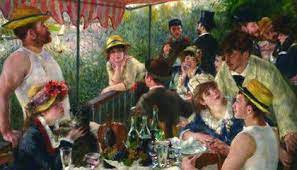
Today’s brief asked me to choose a picture and write about it – which isn’t a million miles away from the Writing question our GCSE students have to do for half the marks on their Language Paper 1. (Except they’re given a picture instead of choosing one.) I’ve taken one of Renoir’s most famous paintings, Le déjeuner des canotiers, and used it as the inspiration for this piece in which Renoir’s much younger lover (later his wife) struggles to establish how the great artist feels about her. Names and dates are factually correct, but the rest is pure speculation.

Domestic Bliss

He stands back from the canvas, eying his work critically. How many days, weeks, months has he put into this painting now? At least he was able to paint most of his group of friends en plein air as they relaxed on the balcony of the Maison Fournaise last summer. It had been a hot day, he remembers – there had been many hot days by the Seine in Chatou –  and he had been able to capture his trademark light and shade in the combination of figures, still life and landscape. Fournaise and his sister had both been there, of course – he’d rewarded them for providing the location by placing them both in prominent positions on the left of the painting. Everyone else is crowded together on the right – everyone, that is, apart from Aline.

Aline is speaking to him now – or perhaps berating him would be a more accurate phrase. “It still doesn’t look like me, Pierre,” she says sulkily. “The hair is darker, and my eyes are almost closed.”

“You know I match hair colour to the rest of the painting,” he replies absently. The truth is that another woman had originally posed for the figure now representing Aline. Aline is blonde but he’s darkened her hair a little for this – it’s easier to show the effect of sunlight glinting off burnished,  brunette locks. He’s captured her plumpness, though, and the rosy softness of her skin, trying to encapsulate the dizzying effect she had on him when he saw her for the first time a year ago. He likes rounded, fleshy women and he will continue to paint their sensual curves for the next thirty-eight years. Aline will grow plumper still after the birth of their three sons – plumper and even more beautiful. She will be immortalised in many of his pictures, sometimes clothed, sometimes not; with their children, or posing with other people, or sometimes just by herself.

For now, though, she is angry, hands on hips, scolding him as if she were his wife. “You still haven’t introduced me to most of these friends of yours. Are you ashamed of me? Ashamed that your lover is just a dressmaker?”

“Aline,” he protests, listening with only half an ear, his mind already running over further areas that need touching up or repainting. Perhaps it was a mistake to replace the redhead with Aline: one should not let too many mistresses share the same canvas and Jeanne Samary is obviously visible on the right-hand side of the painting. It had never been serious between him and the Comédie-Française actress, despite her parents liking the idea of him becoming their son-in-law. She is definitely his type, though: blessed with the plump figure he admires so much in both a model and a woman, she looks positively pretty in his 1877 portrait of her – the one painted predominantly in pinks and greens.

“Pierre! You’re not listening to me!” and Aline stamps her pretty, little foot. “The Samary woman smirked at me when we met her after the theatre. She said you are not the marrying kind.” Her voice wavers and she turns her large, lustrous eyes on him, full of anger and hurt.

“But we cohabit, my little dove,” he says in surprise. Is that what she wants? A ring on her finger? What difference would it make?

“If I had stayed in Aube,” she says, her cheeks wet with tears, “I would be married by now – and I would have a fat, little baby crawling at my feet.”

“If you had stayed in Aube,” he corrects her, kissing her gently on her eyelids and tasting the salt of her tears, “then we would not have met. How fortunate I am that you came to Montmartre with your mother!”

She twists away from him and he knows that she has not forgiven him – not yet. He sighs. What is a man to do?  His first muse, Lise, had been just the same – but he had been younger then: only twenty-six; and they had moved in with his parents for a while for he could not afford to marry at the time. When she had become pregnant with his daughter, Jeanne, he had not been able to acknowledge her officially – much as he wanted to. A wet-nurse had taken the infant and he had made regular donations towards the child’s keep.

He is now almost forty – nineteen years older than his current lover – and an established artist. Is he ready to be a father in deed as well as in name? Is that what Aline wants?

Two years later, another one of his models, Suzanne Valadon, will give birth to a son. Ostensibly the child of her paramour, Miguel Utriillo, it will be whispered abroad that the father could be Degas or even Renoir himself, such is Suzanne’s bohemian nature. Aline is more conventional and there will be tears when she hears the gossip – not least because she has always suspected her lover to be in another woman’s bed when he is not in theirs; but the birth of their own son in 1885 will give her security; and when Renoir finally marries her in 1890 (she will be thirty and he almost fifty), she will know that his love for her is stronger than his feelings for any of the others.

He examines the painting again, congratulating himself on his technique. The folds of the white tablecloth! The way the light filters through the leaves of the trees in the background and refracts from the wine bottles on the table! And Aline herself – it was a stroke of genius to have her holding the little dog, looking at it as affectionately as if it were a baby. Perhaps one day in the future…

“Is it true, Pierre?” she demands now. She really will not let this matter alone! “Are you truly not the marrying kind?”

“Aline, chérie, you know I believe in marriage – but it is the marriage of my brushes with my paints. I am an artist – not a draper. Respectability is for the provinces, not for Paris.”

She exits the room in floods of tears and he sighs. They have not all been as difficult as her – he and his beloved Marguerite hardly had a cross word; but then ‘Margot’ died of smallpox, four years before he met Aline, and he had buried his love for her in the coffin that held her body.

Marguerite had been beautiful – ‘Margot’ was her alias for her modelling work – but neither she nor Jeanne Samary nor even Lise could hold a candle to Aline. She is my ideal woman, he thinks now, and she will forgive me eventually for not marrying her. He will not break with this one: she epitomises everything a woman should be.

Now, however, more pressing things beckon. The muscles in Caillebotte’s arm are not quite right, and since the art patron is an avid boatman himself, Renoir needs to create an impression of strength and power in those arms, despite his friend’s relaxed attitude sitting backwards on a chair. Angèle Legault has been painted listening to Caillebotte with rapt attention, and as he gives the canvas his full attention, he notices that almost all of the women are staring adoringly at a male figure – even Aline who is gazing at the Affenpinscher in her hands as if the dog is imparting wisdom to her.

No doubt the critics will say the painting symbolises his ego.

Like The Prose 2021 – Day 26

Today’s brief asked me to channel my pet and write from his or her perspective. I don’t have a dog or a cat – or even a goldfish. (Years ago, when my daughter was six or seven, we had a hamster but they’re not known for their longevity.) However, a few months ago, a vixen decided to make her home under the decking at the back of the garden and gave birth to four cubs. I’ve watched these little ones grow and develop and spent ten minutes or more this morning at around 5.30 am, standing by the back door and watching one of the cubs prance around, playing with a ball he’d found. They’re such playful little things and in my mind, they’r emy adopted pets – even though I know they’ll grow up and move on soon. (They’ll have to – they leave too many ‘presents’ on the lawn.) This piece, then, is written from the mother fox’s perspective and charts he rlife as a single parent.

Foxy Lady

Darkness descends as I trot along the hard, grey ground, following the scent of other foxes as I search for somewhere that will serve as a makeshift den. I am still not used to these solo journeys, but my mate went out some time ago and did not come back. The light in the sky overhead is a pale colour as it always is when I go hunting. I venture out little when the light is bright – there is not much food to be had then, and the strange two-legged creatures seem to be everywhere.

The trail leads me through a place with grass and trees and I sniff cautiously, wondering if I can find a burrow of some sort. My belly is too heavy with the young I carry for me to start digging a substantial hole, but my babies need to be born underground in a place safe from predators.

Nothing.

My heart sinks as I realise I have nowhere to have my kits. Surely there must be somewhere? I begin to run, trotting away from the soft grass and rejoining the hard surface.  Strange shapes loom in front of me, but it’s not the first time I’ve seen them. Once, I saw another fox push one of these things until it toppled and spilled its guts on the ground – and what wonderful guts they were! Bones with bits of meat still clinging to them, and things that tasted sweet, and green stuff – like grass, only better. For a moment, I wonder if I could somehow climb inside and hide until the cubs are old enough to leave home; but even if I could make my way inside, my little ones could not climb in and out; and if I managed to carry them one at a time, picking them up by the scruff of their necks, I would have to leave them alone while I fetched the next one – and who knows what might try to eat them if I am not watching them all the time.

The wind changes and I catch a faint odour of something that smells good to eat. Letting my nose lead me, I come to a tall, hard structure with gaps large enough to squeeze between. My belly drags on the ground and I know that my time is near.

More grass, with funny trees that grow in long unbroken lines. I wriggle through branches to find more grass and more long trees. Repeating the process, I come to a stretch of grass that smells of something not-fox – some sort of animal that will be good to eat. My eyes make out shadowy shapes within a structure raised from the ground and a smell of fear permeates the night. I approach, but there is something hard and sharp preventing me from investigating these furry creatures. Diving under branches once more, I find grass – lots of it – and an interesting looking hole that disappears under something low and flat and hard.

*

My kits are finally here. There are four of them in total – two boys and two girls but they are all identical. Their eyes are still closed and they are as deaf as they are blind. I lick their grey velvety skin, hoping their hair will grow soon. They smell my milk and whine with hunger, so I wrap my body around them for warmth, letting them nuzzle blindly until they have found my teats. Once fed, they sleep – and so do I.

*

My babies are now balls of black fluff. I worry about how to find food for us all. My milk will not last forever. Several times, I have left them sleeping and crept out onto the grass when the light is pale overhead. I managed to dig up long, slippery things but they were gone in an instant. My belly moans for solid food. If my mate were here, he would provide for us, but he is not coming back. I must raise our cubs without him.

*

Their fur is now grey. They have followed me outside, wobbling on unsteady legs, and they blink in surprise at the light. Until now, they have known only the comforting dark of our strange den and the hard confining walls. I see the smallest scenting the air – they must all feel overwhelmed by the space around them, by the feel of the grass underfoot, by the cool sensation of the breeze. I watch them proudly, marvelling at their perfect black noses and their small, rounded ears. Their tails are covered with the same grey fuzz as the rest of their bodies. They will slip in and out of the shadows when I take them hunting later.

*

The first hunting expedition has worn me out. I could manage two cubs, but four on my own! It is not easy being mother and father at the same time. Still, I have showed them how to sniff the ground and follow the smells that lead to food. I pushed my way through the long trees and back again several times until they understood what to do, then led them away from the grass and towards the hard, grey ground. Trotting through the semi-darkness, we found strange food in a pile. It did not smell harmful, so we tasted and then ate. Perhaps the two-legged creatures left it there for later – I do not think they hunt as we do.

               They are sleeping now, huddled together in a mound of grey fur. I watch them for a while, then close my eyes. It is unlikely that enemies will come while we sleep, but my teeth are sharp and I will fight to the death to defend my babies.

*

They are growing fast. Their ears are now more pointed and their muzzles sharper. They are losing their adorable baby-features, their fur becoming brown. Soon the brown will turn to red and the boys will look like miniature versions of their father.

               They fight constantly, forever squabbling for more room in the safety of our darkened den. Then, when they get outside, they jump around in the grass, tumbling over one another as they play and wrestle, and yelping in excitement. I smile to hear their high-pitched barks.

               One of them has already encountered another animal – much the same size but leaner. The not-fox appeared in the grass, a short distance from our den, and stood staring at my playful little ones. The oldest is the bravest and he bounced his way over to the strange creature, jumping around it as he tried to understand what it was. I have seen these lithe beasts before – they are like us but their tails are thin in comparison to ours and they do not share our long, pointed snouts. When they are afraid, they arch their backs and hiss – as this one did when confronted by a giddy, prancing cub. My poor little one thought it was a game. He tried to bat this stranger with his paw – the way he plays with his brothers; but it disappeared in a blur of black fur. They will learn who to trust as they grow older, just as they will learn which animals are good to eat.

*

I have been teaching them how to bark properly. They can imitate the growl I use when I call them to me or tell them to feed, but they need to know how to warn against intruders. The youngest raised his voice earlier and I thought he was in trouble, but he was telling me he had caught a small, squeaking animal  with a long tail. I showed them how to tear the creature apart and eat the meat. They have been stalking the feathered things but without much success: each time they leap, there is a flurry of feathers and the things rise into the air – too high for any of us to reach. I have caught several in the past and they are plump and juicy compared to the little squeaking things.

               Warmth spreads over the grass from the bright light above. I let it dance on my fur, thinking that soon we must return to the den, but my children are leaping around again, playing hide and seek with each other in the fragrant grass. Perhaps they will sleep for longer if I let them wear themselves out now?

               Keeping one eye open, I let myself drift off to sleep.

Like The Prose 2021 – Day 25

Today’s brief was ‘pulp fiction’ – the genre, not the Tarantino film. I decided to give my story a twist by making my protagonist a female detective instead of a male; and I also threw in time travel so that my modern day police officer could travel back to 1920s New York. However, I’ve decided not to share it on here in case I want to try publication elsewhere.

Like The Prose 2021 – Day 24

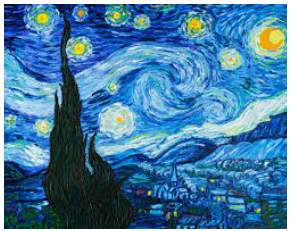
Today’s challenge was to write in the style of an artist. I’ve chosen an imaginative interpretation of Vincent Van Gogh, using his painting ‘A Starry Night’ as inspiration.

A Starry Night

1881. Stars explode in a million galaxies when I see her. My emotions swirl. She is a splash of light against the darkness of my life. Colours  dance across the canvas and my heart swirls, whirls and twirls with them. Kee. The name pulses, radiates. I see her face and I am spinning across galaxies, dancing with stars. She is seven years older than I, recently widowed and with an eight-year-old son. These layers of information only add depth to my feelings for her. I lay out the canvas of my heart, swirling dark blue emotion in dizzying patterns, punctuated with explosions of yellow happiness. Kee. It sounds like the French word for who. Who has made me happy? Kee has made me happy. The yellow stars eclipse the dark night; she and her son have broken through my depression and we will form our own little universe together.

She does not want me.

I have declared my love; I have proposed marriage; but she does not want me. “Nooit, neen, nimmer.” No, nay, never. The stars wink out so that only deep blue swirls remain. The untouched yellow paint dries up on my palette. I no longer dance across the sky.

Picking up my charcoal, I sketch the bleak lines of life without her.

1882. I have learned to love again. Colours swirl in my mind. Sien also has a child and she is pregnant with another. Am I fated only to love maternal women?

Sien’s life is as tumultuous as mine. Wine swirls in the glass of her life, pulling her down to depths even I was unaware of. I keep my alcoholic prostitute a secret: she is the Mary Magdalene to my former Virgin Mary. It seems purity and degradation are not so different after all. The deep blue swirls in my mind, merges both women into one. Kee. Sien. Sien. Kee. Keesien. Sienkee. I am spinning through galaxies, searching for pinpricks of light.

1883. We drift apart. Sien will spiral deeper into deprivation, returning to her former trade. She will outlive me by fourteen years,  but in twenty-one years’ time, she will let the dark blue water of the River Scheidt swirl over her head.

The sadness lasts forever.

1884. A neighbour’s daughter, Margot, is in love with me. I return her affection, though with less enthusiasm than I might have done before Kee. Our marriage is thwarted by both sets of parents, but I am used to disappointment: first Kee, then Sien, now Margot. She, alas, is not so lucky. Strychnine swirls through her bloodstream but the hospital saves her before her face can turn blue. The oil paintings I produce the following year are dark and sombre. There is no life in them.

1889. I have entered an asylum in Saint-Rémy. It is not so far from Arles. Years of disappointment and despair have piled layer upon layer of deep, dark blue on my heart and mind. Taking my palette knife, I cut through the paint as Kee cut through my heart with her rejection. I swirl the layers into never-ending circles of despair. Here and there, blobs of yellow paint suggest hope, but the stars and even the moon are overshadowed by the dark tower of my mind. It looms at the forefront of the painting, reminding me that I am still a prisoner of my own unhappiness.

It is one of the best paintings I have ever done.

In years to come, those who view my painting will not see the years of hurt and rejection. They will be deaf to the voices that cry out constantly in my mind. They will admire the swirling blues of depression and the clouds of despair, and they will think the yellow stars and moon symbolise light and hope. I have painted my agony in a maelstrom of madness, but they will only see A Starry Night.

Like The Prose 2021 – Day 23

Today’s prompt asked me to write about why doing something right ended up feeling wrong. I’ve interpreted this rather loosely with a somewhat ASD narrator who needs everything to be ‘right’ and inadvertently causes problems for others in the process. As with other prompts, I’ve decided not to share this one in case I want to publish it elsewhere.

Like The Prose 2021 – Day 22

My brief for the 22nd was to write about a con artist. I love the TV show ‘Hustle’ and the various films concerning con artists, scammers and swindlers, but felt I wanted to take a more literary approach with this one, so I’ve created a Regency style story involving a young man who decides to con women out of their jewellery. I had a lot of fun writing it and hope you’ll have fun reading it.

Broken Hearts and Baronets

Henry Davenport was broke. He’d frittered away most of the fortune his father had left him – wine, women and cards were expensive hobbies – and was down to his last few hundreds.

“You need a rich wife, Harry,” Josiah remarked as they cantered through the forest one fine autumn afternoon. “A girl with enough money to keep you in the manner to which you’re accustomed.”

Henry nudged Lady’s reins gently. The mare was spirited, but he managed to let her know who was in charge. Women were a lot like horses: once you’d broken them in, you could easily steer them in the direction you wanted.

“There’s a ball at Grantleigh Manor this Saturday,” Josiah continued. “Bound to be a few fine fillies there, what?”

Henry considered his friend’s words gravely. At twenty-three, he felt he was far too young to be shackling himself to a wife; still, needs must where the devil drives and all that rot. He’d put on his best frock coat and the breeches from France and he’d jolly well bag himself the prettiest little thing he saw – provided she had enough money, of course.

As Lady trotted over the bracken, he began planning how he would spend his new wife’s money.

*

Lady Lavinia Grantleigh was one of the richest women in the county. She was also one of the most foolish. Slightly too tall and well built to look entirely feminine, her eyes were just a little too pale and her nose just a trifle too long for her to be regarded a beauty, but Henry would say anything necessary to convince this prize specimen that he was marriage material.

“Have I mentioned how musical your laugh is?” he murmured, bending low over her hand – ostensibly to kiss it but in actual fact counting how many rings she wore. Why, just one of those sparklers would cover his losses at the card table for a week!

Lavinia let out a self-conscious peal of laughter. It reminded Henry of a corncrake, but he pressed on, determined to clinch this transaction.

“I wonder if I might beg a keepsake of the woman I love,” he tried next, gazing soulfully into her anaemic eyes with a look that hinted at barely bridled passion. (He’d been practising in front of the mirror all week.)

Lavinia blushed, staining her cheeks an unbecoming red somewhat at odds with her rather carroty hair. Some women could carry off auburn locks; unfortunately, Lavinia was not one of them.

“Lord Henry,” she simpered, fluttering her fan in what she hoped was a suitably flirtatious manner, “you should not say such things! We have known each other only an evening.”

“Is that all?” Henry replied gallantly. “It seems much longer.”

It really did seem much longer. Lavinia had to be one of the most boring women he had ever met. She knew nothing about horses and less about dogs. (You couldn’t call that ridiculous rat she kept on her lap a dog! What was it she’d said it was? Some fancy Mexican name.)

Eventually, after a truly excruciating evening, Henry managed to extricate himself from Lavinia’s presence with an invitation to come for tea the next afternoon (tea, for goodness sake! Why not coffee? Now that was a man’s drink) and a rather ugly looking ring containing a large garnet which, she whispered, was a sign of good faith. It was not exactly a promise to marry him, but it was her way of saying she would not pledge her heart to another.

*

It was as he was riding home (the coach already having been sold to settle a few gambling debts) that an idea struck him – why get married at all? If it had been as easy as this to persuade that frightful looking girl to part with some of her jewellery, why shouldn’t he court as many women as he could and amass the funds he needed by sweet talking them into parting with rings and lockets? And they might give him other things that could be turned into gold.

Impressed with his own brilliance, he withdrew to the study as soon as he reached the modest eight-bedroomed pile left to him by his father. Fetching the copy of Debrett’s Peerage from its place on one of the bookshelves, he began turning the pages. He would limit himself to girls who had no brothers, he decided – after all, he didn’t want to be challenged to a duel by some angry chap who thought Henry had besmirched his sister’s honour.

*

And so it was that Henry found his true vocation. Like any other modern man of the early 1800s, he applied himself seriously to idle pleasure. Always impeccably dressed, he was the quintessential dandy; conversationally, he was a rattle par excellence; and above all, he was a fastidious flaneur. What Henry didn’t know about the well connected simply wasn’t worth knowing. He kept a small, leather-bound notebook in which he recorded every conversation he had with a woman – along with details about her likes and dislikes and how easy it was to part her from her jewellery. One typical month’s entry included no fewer than six different women, each one accompanied by a description of the ‘gift’ she had given him. So far, he had pawned an emerald necklace, two strings of pearls, six diamond rings, three pairs of earrings, several tie pins and sets of cufflinks and an incredibly vulgar ruby pendant. His modus operandi was simple yet effective: no matter what the girl looked like, you just told her she was pretty then looked at her for a while with what she construed as desperate longing while you let your mind wander into more interesting realms.

He had perfected the art of making it seem as if he were proposing marriage without ever actually using the words – that way, he could not be sued for breach of promise. He was careful, too, to choose impressionable girls who would believe his claims that their reputation would be ruined were they to tell anyone what had transpired between them. (It was mostly flirting with very occasional kissing, but his objets d’amour were too inexperienced to know that every woman indulged in a little dalliance now and then, finding excitement in the secrecy.)

*

It was on a beautiful spring afternoon that he thought up his finest plan yet. A gentleman by the name of Mountebank had recently begun renting Rugely Hall, a well-appointed establishment on the other side of the park. The man was a widower with five daughters – all of them at marriageable age. There was some sort of unmarried sister who acted as chaperone to the girls, but Henry decided she wasn’t important. He had learned from experience that most young women possess a devious streak when it comes to matters of the heart and he was convinced that these newcomers would be like all the others and would endeavour to find ways of being able to talk to him alone. What a triumph it would be for him to court all five simultaneously without any of the girls knowing what her sisters were up to!

Without further ado, he ordered a servant to deliver his card to the Mountebanks. Thanks to his hard work over the past six months, he was now well equipped to play the rich, young gentleman. He had cleared his gambling debts and built up a respectable bank balance, and he once more owned a fine-looking carriage and a pair of well-matched horses. It should be easy to inveigle himself into the family – particularly one with so many daughters who would all be seeking husbands.

The first meeting was a great success. Henry had never been more charming; his conversation never wittier; his attire more flamboyant. He was unable to meet Colonel Mountebank himself as the gentleman was suffering from a particularly nasty episode of gout which kept him confined to his chamber, but every one of the five daughters had turned out to meet him and pretty things they were too – each one of them as different as if they had not been related. Under the pretext of wanting to see the garden, he had managed to persuade the eldest, dark haired Maria, to step outside with him for a few moments and had then declared his undying love for her in the rose garden. The location had been a nice touch: he was able to present her with a rose, deliberately pricking his finger on a thorn as he did so and telling her piteously, “My heart bleeds for your love – far more than that finger.”

The following day, he visited again – this time to accompany the young ladies on a walk. He somehow contrived to find himself alone with green-eyed Louisa – how convenient that she had caught her foot in a rabbit hole and twisted her ankle! A very pretty ankle it was too – he had placed it in his lap and gently massaged it until she felt able to rejoin the rest of the party. He knew she would not tell anyone he had declared his feelings for her: it was not done for a younger sister to have found a potential husband before the eldest.

The third day saw him begin his campaign to capture Sophia’s heart. Her brown hair and blue eyes were pleasing to look at, and she had a rosebud mouth that seemed to demand kisses. She did not complain at any rate when he demonstrated his ardour for her by letting one of two land on her lips rather than her hand. “Of course, you can’t tell your sisters about this,” he murmured in her ear as they left the drawing room where, she insisted, she had left her novel, and returned to the smaller salon to resume polite conversation over tea. “I wouldn’t want to be the cause of any jealousy.”

Her large, innocent eyes widened in surprise before she dimpled prettily and agreed that some things were best kept secrets.

By some stroke of luck, he was able to begin his charm offensive with Eleanor, the fourth sister, only a day later. Eleanor had offered to play for them and Henry gallantly said he would stand by the piano and turn the music for her. That gave him ample opportunity to murmur endearments to her whilst out of earshot of the others. The sunlight catching her red gold curls was not as bright as the dazzling smile she gave him after he had showered her with compliments.

He now had four out of five of his targets lined up and was somewhat surprised it had been so easy. He had half-expected Colonel Mountebank’s sister to intervene at an inopportune moment, but it was almost as if she knew what he was up to and was actively encouraging him to court all five sisters at once! Perhaps she was: she might reason that at least one flirtation would end in marriage and she might not be particularly choosy which one was married first. It would no doubt make her job easier if she only had to find husbands for four girls and not five.

Rosamund was the last to fall under his spell. Only just eighteen, she had large, blue eyes and golden ringlets and had not yet lost her childhood plumpness. She reminded him of a puppy: quite adorable and with no sense at all. When he told her he loved horses and would like to see the stables, she was more than happy to offer to take him there – and she didn’t complain when he kissed her in one of the stalls. No doubt she was over-excited at the thought of being the first of them to have a beau, but he made her swear solemnly not to tell anyone else that she was as good as engaged.

*

He’d been a frequent visitor to Rugely for three weeks when he began to wonder if it were a mistake to court five women simultaneously. So far, they had all seemed receptive to his advances, but not one of them had offered him a present and he was used to being able to wheedle wealthy young women out of their jewellery in half as much time. However, things took a surprising turn when the girls’ aunt approached him one afternoon as they were setting off for a group walk and asked if she might converse with him.

Strolling through Rugely’s ample grounds, they let the girls wander ahead of them, smiling to see them enjoy the morning sunshine. “You have been very kind to my nieces,” Miss Mountebank remarked.

“They are delightful young ladies,” Henry said carefully. Attempting to change the subject, he added, “You seem an excellent chaperone to them, although I confess you do not look much older than they do.”

It was true. Colonel Mountebank must have been approaching fifty whereas his sister seemed not to have reached thirty.

“He is my half-brother,” Miss Mountebank said. “Edwin’s mother died when he was a boy and his father re-married some fifteen years later. He has always been very good to me and offered me a home with himself and his wife when he got married. It was fortunate that he did so, for poor, dear Allegra died soon after Rosamund’s birth. I have cared for all five of them ever since.” She paused. “They are as dear to me as daughters, Mr  Davenport. I would not see any of them hurt.”

“Nor I,” Henry protested. “Why, I have been the soul of propriety…”

“Not so.” She cut him off. “I rather fancy that you have let each and every one of my nieces believe that you intend to marry her.”

Henry’s heart stood still.

“You have not been entirely honest with them, have you?” she continued. Then, as he started to protest, she laughed. “Did you really think I would not notice? You and I are cut from the same cloth, Mr Davenport. I too have mastered the subtle art of dalliance in order to gain men’s confidence and inspire them to shower me with gifts.” She smiled roguishly. “An unmarried woman must resort to whatever tools she has at her disposal.”

Henry began to relax. She was just like him! He could not help feeling admiration for her.

“Please, call me Harry,” he said.

“Very well, Harry – and you can call me Letitia. Now, let us discuss how we can use this situation to our mutual advantage.”

*

A week later, Henry invited the Mountebank sisters and their aunt to visit his home. Although not on the same grand scale as Rugely, it had a fine library and Letitia had expressed an interest to see some of the first editions his father had collected.

“Besides,” she said, dimpling prettily, “it will further the pretence if the girls think you intend for one of them to live there with you as your wife.”

And so it was that Henry found his house filled with women. Leaving the girls to exclaim over the wallpaper in the parlour, he led Letitia to the library. However, once inside, she closed the door and motioned to him to sit down on one of the dark green Chesterfields.

“Have you noticed that each of the girls is decked out in her finest jewellery?” she muttered. “I know it is not usual for an afternoon occasion such as this, but I thought this would be an ideal opportunity for you to relieve them of their gems. I take it you have a safe?”

Striding to the fireplace, Henry reached up and removed the oil painting that hung there, revealing a small door built into the wall. Taking a key from his pocket, he unlocked it and showed her the items he had collected so far. It was a while since he had visited the pawnbroker and the cupboard housed a most impressive haul.

“You’ve done well,” she said approvingly. “Oh, Harry, just think of the life we could have together if we teamed up. I’m tired of playing nursemaid to my nieces – once you’ve filled your safe with their jewels, we should elope together. We could live in luxury for years on what you have here.”

“I’m not really the marrying kind,” he protested.

“Nor I. But there are certain… benefits… to a man and woman working together.”

She was suddenly very close to him. He became aware that the dress she was wearing was exceptionally low-cut – almost scandalously so – and that her diamond necklace only accentuated her decolletage.

“I see you are admiring my own jewels,” she murmured. “The stones were a present from a would-be suitor – they are worth hundreds.” Again, she paused. “With what you have here already and my nieces’ jewellery, we have a small fortune.”

Her eyes held his. Mesmerised by her diamonds as much as by her beauty, he found his mouth reaching for hers. He did not really want a partner in crime – she would be old one day, and women only really appealed to him if they were attractive to look at. But there was no harm in making her think that they could work together.  After all, she could not expose him without compromising herself.

“You may have my diamonds as a sign of good faith,” she said, slipping them off and presenting them to him. “Now, shall we return to those girls? I think we both need a little refreshment.”

*

Despite the fact that it was only mid-afternoon, someone had laid out glasses and a decanter of sherry. He should have really offered some to his guests first, but Henry needed a drink to steady his racing heart. Damn the woman! She was incredibly bewitching – but then she wouldn’t always look like that. He grabbed the glass from the table and downed its contents hurriedly. And then he knew no more.

*

When Henry came to, he was back in his study, sitting on one of the hardbacked dining room chairs, his hands bound behind his back and his feet tied to the chair rungs with what looked like a silk scarf. What was happening?

“Letitia?” he croaked. His throat felt dry and parched.

Her lovely face loomed above him. He noticed she was wearing her diamonds once more, and that the door to the safe stood open. The cupboard was completely empty.

“I’d like to say it’s been a pleasure, Harry,” Letitia said, watching his gaze travel from the empty safe back to her. “Only, you made it far too easy. Did you really think no one would realise what you’ve been up to these past six months?”

Surprise and shock numbed him.

“Not one of these lovely young ladies is my relative,” she continued. “They have merely been bait used to inveigle an invitation to your home. I knew you must have stowed your ill-gotten gains somewhere – and I was not wrong.”

Not her nieces? Henry struggled to understand.

“Colonel Mountebank is not my brother,” she went on, “and nor are these girls his daughters. We are friends who work together to relieve scoundrels like you of the wealth they have stolen from others. We don’t return the money and jewels, of course – if the victims are stupid enough to let themselves be gulled, they deserve to lose everything.”

“You won’t get away with this.” Henry’s voice came out in a croak.

“I rather think we will,” she replied smoothly. “How can you complain that you have been robbed when what has been taken from you was not yours in the first place?”

She bent and kissed him lightly on the forehead. “It couldn’t have happened to a more worthy opponent, Harry. And perhaps, in future, you will think twice before you try to swindle innocent women out of their jewellery.”

As she and her five accomplices quit the room, Henry was left staring at his empty safe and ruing the day he decided to deceive the Mountebanks.

Like The Prose 2021 – Day 21

Today’s brief was to write a fantasy story. I had the idea of ‘The Last Dragon’ going around in my head, mixed with the notion of a dying world, so I decided to use the metaphor of dragons dying out to symbolise the state of our planet – have I just created the eco-fantasy genre? I haven’t shared the story due to publication rights if I ever decide to submit it elsewhere.

Like The Prose 2021 – Day 20

Day 20 must mean time for another story about the summer solstice. Last year, I wrote a story involving Robin Goodfellow (or Puck as he is known in Shakespeare’s A Midsummer Night’s Dream). This year, I’ve taken a character I created for one of last year’s briefs, Saint Aidan, an Irish holy man, and imagined what would happen were he to be called to an English village not far from Stonehenge on Midsummer’s Eve…

Saint Aidan and the Summer Solstice

It so happened that Saint Aidan was called to England – there were rumours of hobgoblins teasing a small village and the local priest was his wits’ end. Never a one to turn down a plea for help, Aidan sought the services of Padraig, a local boy with a boat, and the two set off from Wexford and rowed across the Irish sea, landing on the Welsh shore for they were heading for the south west of England and a village not far from Salisbury. Saint Aidan was pleased to know they would pass through Salisbury for it had a fine cathedral which had recently been completed, and he thought how grand it would be to see the edifice that had been built to the glory of God.

It took several days for them to reach Salisbury, some of walking on their own two legs and some of it riding with farmers in their carts. Padraig was a little in awe of the saint for as they walked along, Aidan stopped and listened to the birds, talking to them as if he could understand their twitterings, and several times along the way, foxes crept out of their holes and trotted along beside them or squirrels scampered down trees and leaped onto his shoulder.

They had expected to sleep under the hedgerows, for it was almost midsummer and the nights were mild, but somehow, they always seemed to find a farmhouse that was willing to offer them shelter – and it was always somewhere that needed Aidan’s help. “The Lord provides what is needed,” Aidan said, smiling serenely when Padraig commented how strange it was that things always turned out so.

At length, they came to Salisbury and spent half a day wondering at the magnificence of the cathedral and kneeling in the nave for prayer and contemplation. Padraig thought there would be plenty of offers of hospitality for them both, but Aidan said no, they were aiming to reach Amesbury that evening for how could he deal with spirits that played tricks at night if they were tucked up here in Salisbury?

*

It was still light when they approached Amesbury despite the fact that the cathedral clock had struck seven before they left and they had been walking briskly for at least two hours. Padraig noticed that most of the houses had their shutters closed and many of them had bunches of St John’s-wort nailed to the doors.

“It’s to ward off evil,” Aidan explained. “Superstition and faith go hand in hand with a lot of these people,” and he strode towards the most imposing house of all and knocked loudly on the door.

Padraig saw the shutter being drawn back and a face peeping out, and then the door opened slightly and a voice whispered, “Are you the man who’s come to help us?”

When Aidan replied that he was, a hand beckoned him inside and Padraig went too.

“They’ll be here soon,” the man said. He was wild eyed and frightened and Padraig felt sorry for him.

“What makes you think it’s hobgoblins?” Aidan asked.

The man began to stammer out a litany of all the things that had happened in the village recently: milk turning sour in the cows, blighted crops, babies born with twisted limbs and a dog with two tails and three legs. Aidan listened patiently. “I’ll see what I can do,” he said as the list came to a halt; then striding towards the door, he disappeared into the half-light of Midsummer’s Eve.

*

The sky was a strange colour when he stepped outside. It was not yet night but it was not day either. Aidan looked about him, sensing the presence of faerie folk. “Show yourselves,” he called for he knew that Midsummer’s Eve is the night on which the veil between the world of spirits and the world of men shimmers and divides, and that the faerie folk then walk among us, and – if we are unlucky – we might stumble into their world too.

 Some of the shadows shifted and become small, pointy-eared creatures, having the shape of men but with a wildness about them. They rubbed their long-fingered hands together, grinning maliciously as they wondered what sport they would have with this foolish human.

“Have you been tormenting the people of this village?” Aidan asked sternly, and the goblins shook their heads and grinned all the more.

“Their cows give sour milk,” one whined, “but that is the fault of the stream from which they drink. A man killed his brother by drowning him in the stream, and now the water is bitter.”

“The crops are blighted,” added another, “but that is because the farmers refused to help an old woman in need and she cursed them.”

“And babies are born with twisted limbs,” said a third, “but the mothers have all eaten berries that cause birth defects. What need have we of mischief here when the villagers have created trouble for themselves?”

Aidan listened gravely and then nodded his head. “I shall put things right tomorrow,” he said, “but tell me, you who are kin to the faerie folk, why is it that you walk abroad tonight?”

“The Great Hunt!”   one of them cried out and the others took up the refrain.

“The Great Hunt!”

“Robin Goodfellow comes! And Merlin himself!”

The air swirled and it was night and not night, the world taking on an otherworldly gleam. The moon rose, pale and fat over the horizon, and a sound was heard like the tinkling of bells and the laughter of children and the murmur of the wind all at the same time; and a tall figure stepped out of the shadows of Faerie and into the village of Amesbury, and Aidan knew without being told that this was Robin Goodfellow, the mischievous sprite of legends.

“Ill met by moonlight, man of the Church,” said Puck (for that is one of Robin Goodfellow’s names). “What business have you being abroad on such a night as this when the Old Religion is strong?”

“Your pardon, Goodfellow,” said Aidan humbly. “I mean no disrespect to you or the Old Religion. I ask simply that the people of this village might not be harmed as you go about your revels tonight.”

“Then run with us,” Puck said, letting an impish grin spread across his face. “Join us tonight in the Great Hunt – and if you can keep pace with us, I will grant your request.”

And putting a horn to his lips, he blew a note so clear and strong and beautiful that it would have charmed the birds from the trees – had they been still awake – and so terrible that it would make the bravest man hide under his bed (as indeed many of them were doing at this point). The sound reverberated in the strange half-light and Robin leapt high in the air, shouting, “The hunt has begun! Tally ho!”

And as he did so, hundreds upon hundreds of faerie folk streamed through the gap between the worlds: elves and pixies, leprechauns and kobolds, dryads and naiads, trolls and hobgoblins. Thick and fast they came, caught up in the mad whirl – half-dance, half-chase. And Aidan picked up the skirts of his robe and ran with them, faster and faster, over hill and dale, through streams and rivers, forests and dells. The wind tugged at him as he ran and the night-time moths fluttered round his head, but on he went – never once losing sight of Puck and keeping pace with him and the others.

Finally, just as dawn began to break, Puck came to a halt and Aidan realised that they must have circled the world or at least England for they were standing on an area of grassland less than a league from Amesbury and two circles of standing stones looked down at them.

“Well run, man of the Church,” Puck said mockingly. “You have earned the right to converse with Merlin.”

And Aidan looked and saw a man standing by the stones. His beard was long and white and yet it was impossible to tell what age he was, for he was young and old at the same time and his eyes held the wisdom of maturity yet there was not a wrinkle upon his face.

“Salutations, Aidan,” Merlin said. And Aidan bowed his head and returned the greeting.

Then Merlin said, “You have kept pace with my people tonight and no man has done that in more than a hundred years. Thus will I reward you by granting you a boon. What is it that your heart desires?”

“Truly,” Aidan replied, “I am grateful for your offer, but I want nothing for myself, only that the people of Amesbury might be left alone tonight and all other nights.”

A golden glow began to creep across the sky as the sun rose, and Merlin noticed that a nimbus of light encircled Aidan’s head.

“It will be done,” Merlin said, “and now, man of the Church, you have leave to go. For we have gathered to perform the summer solstice rituals, but you do not follow the Old Religion and your presence would besmirch our rites.”

So saying, he tapped his yew staff three times upon the ground and Aidan found himself back in the village of Amesbury without the inconvenience of needing to use his two legs to get there, and though he would have been pleased to lie down and rest a while, he thought of the hobgoblins’ words the night before and knew that he must right the wrongs of which they had spoken.

First he went to the stream and tasted the water and it was indeed bitter, so he dipped his finger in it and stirred the water around until it sparkled in the sunlight and he knew it was pure once more. Then, he returned to the house he had visited when he and Padraig arrived and knocked on the door, and the anxious man opened it, still in his nightshirt and nightcap, blinking in surprise at Aiden.

“Call the villagers together,” Aidan said, and the man did as he was told.

Then Aidan looked at the men and women of Amesbury and he spoke of love and forgiveness and of how God blessed some people that they might share with others; and he noticed three men in farmer’s smocks who stood at the back of the crowd and looked at each other when he said this; and by the expression on their faces, he knew his words had reached their hearts and that they would not be so selfish again; and so he walked to the barley field and the rye field and the field of oats and then he walked through each field in turn, and as his feet passed, the crops ripened suddenly and there was not a sign of blight or mildew anywhere.

Finally, he asked one of the women where the berries grew that were craved during pregnancy, and she led him into the nearby wood and showed him bushes that bore a yellow-red fruit and he sighed for he recognised them as solanum pseudocapsicum, or Jerusalem cherries as they are better known, and he knew too that it is a species of nightshade and that the berries cause sickness; and so he placed his hands above the bushes and let daylight fill him and the villagers blinked in surprise for they had been sure that the berries were yellow-red and yet now they looked, they could see that these bushes produced blueberries.

By this time. Saint Aidan was beginning to feel tired, so as the sun continued to rise to its highest point, Aidan stretched out under an oak tree and promptly went to sleep.

Like The Prose 2021 – Day 19

Today’s brief was to write about emancipation and was inspired by a comment my great-grandmother made when I was 13 and she askedme if I’d “started wearing corsets”. This got me thinking about how restrictive life was for young women in the early 1900s – my great-grandmother was born in 1893 and would have been wearing corsets from the age of 12 or 13. (She started work in the cotton mill at the age of 11, so she would have been seen as an adult rather than a child.) I’ve set my story in 1909 when suffragists and suffragettes were both campaigning for women’s rights, but kept the focus on a more domestic thread of the story.

The Emancipation of Violet

“And how’s your sister?” Mrs Wilkins asked, nibbling at the corner of her piece of bread and butter as she waited for a response.

Violet’s mother sighed. “She seems to have become very political these days. I think it started with Emily – you know what these young women are these days (Violet excepted) –“ She smiled at her daughter before continuing, “They’re both mixed up with those dreadful suffragettes. I daren’t tell Henry: he’d forbid me to see Alice ever again.”

“Suffragists, Mother,” Violet chimed in. “Not suffragettes. The suffragettes are the ones who use violence. Aunt Alice and Emily campaign peacefully for women’s rights.”

She had spoken out of turn and she knew it; nevertheless, she could not let her mother and Mrs Wilkins remain in error.

Mrs Wilkins regarded her coldly. “Violet seems as outspoken as your sister and niece,” she said at last, her tone chillier than the November afternoon outside.

Violet’s cheeks burned with shame. She lowered her eyes and regarded her teacup, waiting to see what her mother would say.

“It doesn’t matter what they call themselves,” her mother said crisply. “Do forgive Violet, Mrs Wilkins. She’s too young and impressionable to understand these things. As if women should be allowed the vote! Men run the country and we run our homes – and that’s the way God intended it, Violet.”

She knew the last words were a reproach. Her mother believed in a God who ordered the estate of rich and poor, male and female. She was so Victorian in her attitudes! Violet thought despairingly, forgetting that it was less than a year since she herself had begun reading exciting pamphlets that challenged the ideas she had been brought up with.

At eighteen, she was still three years off her majority, but her mother had already been making noises about finding a suitable husband for her. Since leaving Miss Minchin’s school two years earlier, she had asked her mother about secretarial courses, thinking it might be fun to seek gainful employment for a year or two before she married – Emily worked in a bookshop in London, not just greeting and serving customers but actually doing the accounts at the end of each day – but her mother had looked so horrified at the idea that Violet hadn’t asked again. From time to time, though, she wondered how other girls in her position managed not to die of boredom living lives that consisted solely of tea parties and tennis matches, sewing bees and piano recitals. Her mother spent time with her each week instructing her in the skills needed to be a perfect hostess and efficient household manager, but Violet wasn’t sure she wanted the life her mother lived. She would hate to spend the rest of her life with a man as uninteresting as her father.

She came back to the present, realising with a start that her mother had addressed her directly. “You will enjoy that, dear.”

“Yes, I’m sure I shall,” she replied absently. What would she enjoy?

“I don’t suppose you’ll be able to avoid seeing your sister?” Mrs Wilkins sounded as disapproving as she had earlier.

“Not really.” Her mother paused. “But if we meet at a Lyons tea room, the conversation can be controlled. Alice would never discuss anything vulgar in a public place.”

So they were going to London? Excitement bubbled within Violet, but she managed to maintain a composed expression. She would see Aunt Alice and maybe Cousin Emily too. Smiling inside, she reached for a slice of seed cake, her head already filled with daydreams and plans.

*

“Do hurry up, Violet,” her mother snapped. “Anyone would think you wanted to get wet.”

The rain had begun while they were at the dressmaker’s.  Her assistant had found them a cab and Violet had enjoyed the swaying of the vehicle as the horse trotted through the steadily increasing drizzle to the Corner House where they would take tea. It had set them down only yards from the entrance so that it should have been a simple matter to dodge the drops, but she stood transfixed for a moment, her eyes taking in everything she could see around her. London was so very different to Tunbridge Wells: it seemed a world full of exciting possibilities.

Heeding her mother’s words, she scurried into the Tea Rooms, her heart fluttering with anticipation.

Aunt Alice was already ensconced at a table. She sprang to her feet as they approached, ignoring their slightly damp costumes to enfold first Violet’s mother and then Violet herself in a warm embrace. “Sybil! And Violet! My, how you’ve grown, child!”

Sybil extricated herself awkwardly from the display of emotion. She was not a demonstrative woman. “Alice,” she said, injecting just enough chilliness into her voice to reproach her sister. Then, “Is Emily not joining us today?”

“She’s at work,” Alice said casually, gesturing to them both to sit down. “I told her to ask for the afternoon off, but she said Mr Herring couldn’t cope without her.” She lowered her voice to a confidential whisper. “It’s my belief they’re sweet on each other. He’s quite young – about twenty-six or twenty-seven – and he’s not married.”

“But you wouldn’t allow that!” Sybil sounded scandalised. “A man who owns a bookshop – why, it’s like letting her marry into trade!”

“Emily is twenty-two,” Alice replied calmly, “and she knows her own mind. If she thinks she’ll be happy with Mr Herring, I won’t stand in her way.”

Sybil removed her gloves fussily before muttering, “If Albert was still alive, he wouldn’t stand for it.”

“Albert had his faults,” Alice’s tone was sharp, “but he was a good husband and a good father. He would have wanted to see Emily happy – like I do.” She picked up the menu. “Why don’t we drop the matter and order tea?”

A Gladys was already hovering at their table, pencil poised over her notepad.

“Afternoon tea for three,” Alice told her. Attempting a smile at her sister, she said, “The cucumber sandwiches are excellent, and I’m sure Violet will adore the petits fours.”

“I don’t hold with this modern idea of letting girls choose their husbands,” Sybil said in a low tone. “You didn’t believe in nonsense like that either before you… before you and Emily got mixed up in that distasteful political business.”

“Times are changing, Sybil,” Alice said mildly. “This is 1909, not 1809. Young women today have all sorts of opportunities we didn’t.”

“Well, it’s not Christian,” Sybil said fiercely. “If God had wanted women to be as bold as you claim, then there’d be something in the Bible about it. We’re told to be submissive, Alice – or had you forgotten that?”

Alice rolled her eyes at her niece. Violet sat enthralled, trying to take in what she had heard. Emily engaged to a man who ran a bookshop! (Well, not exactly engaged, but still…) It all seemed so romantic.

*

Somehow, they made it through tea without any further disagreements, sticking to the safer topics of the weather and hemlines. When Alice realised that Violet and her mother were in London for a few days, to facilitate fittings, she promptly suggested a meeting between the two cousins. “Emily would love to see you, Violet,” she said, smiling at the girl. “She doesn’t work on Saturdays, so I’m sure she’d be happy to meet up in one of the parks for a ladylike stroll.”

Violet wondered if these last words were meant to appease her mother.

Before Sybil could express disapproval, Alice went on, “And you and I could chaperone them.”

Violet’s heart flooded with despair. How could she and Emily talk about anything properly with her mother eavesdropping?

“I’m sure,” Aunt Alice continued, “that it would be perfectly respectable to let them walk ahead of us and exchange girlish secrets while we catch up on our discussion of mutual acquaintances. And there may be a concert in the bandstand – that would be a pleasant way for all of us to while away an hour or so.”

“Please, Mother.” Violet tried not to sound too eager. “I haven’t seen Emily for over a year and we used to be close when we were younger.”

Trying not to appear ungracious, Sybil acquiesced, and so it was decided.

*

It was an unseasonably mild day for November as Emily and Violet strolled through the park, arm-in-arm, chatting quietly with their mothers just a few paces behind.

“Did I tell you I’ve learned to ride a bicycle?” Emily murmured.

Violet’s eyes widened with surprise. It sounded very daring.

“I haven’t told Mother,” Emily continued. “She’s quite forward in her thinking, but I was worried she’d think I was fast if I admitted to something like that. Besides, lots of people think women shouldn’t ride bicycles because it might interfere with their reproductive system.”

Violet blushed at the shocking comment. Had Emily no shame?

“Doesn’t your corset get in the way?” she asked a moment later. The stiff, whale-boned instrument of torture had been the bane of Violet’s life ever since the age of thirteen when she had first been forced to wear it.

“I’ve stopped wearing corsets,” Emily said airily, looking around to make sure her mother wasn’t listening. “There’s so much more freedom in wearing just a chemise and drawers. And when I ride my bicycle, I wear bloomers.”

Forcing herself to keep on walking, Violet tried to process the information. No corsets! How wonderful that would be!

“Is that what the suffragists do?” she asked. “Not wear corsets, I mean.” It was one of the most daring things she’d ever heard.

Emily laughed. “We’re more about campaigning for women’s rights in general – but I suppose the right not to wear corsets could be seen as part of it. You should try it yourself, Vi – it’s so liberating.”

There was no chance of it happening within the next few days, Violet thought gloomily. She and her mother were sharing a hotel room at the Regency, and it would be impossible to leave off her corset in the morning without her mother noticing. It was bad enough that she was scolded for not wearing it to bed – how her mother’s generation put up with that she did not know; but she could imagine the fireworks that would ensue should she be caught without it in the daytime as well.

“I’d give anything to be as free as you,” she said, meaning every word, “but I’m only 18, Em. Mother watches me like a hawk all the time.”

“You poor thing!” Emily sounded sympathetic. “There must be a way to emancipate you from all that whalebone. I wonder…”

A moment later, she stopped walking, turning around to face her mother and aunt. “I’ve just noticed something unmentionable on my dress,” she said apologetically. “A pigeon, I expect. Violet and I will have to pop into the Ladies’ Conveniences so she can help me sponge it off.”

Sybil’s face looked suitably horrified at her niece’s words and Violet knew that she would not examine Emily’s dress for proof.

*

The ladies’ lavatory was a tastefully designed building of late Victorian architecture – far too pretty when one considered its purpose – complete with a  buxom attendant who sat in a chair by the entrance, accepting people’s pennies in a pretty china bowl. Alas, the cubicle was not big enough for two.

“I could unbutton your dress out here and then you should be able to take it off on your own once you’re in the cubicle,” Emily said doubtfully, “but I don’t know what to do about your laces.”

“My corset fastens at the front,” Violet told her, scarcely daring to hope that they might pull this off after all. “I’ll need help rebuttoning my dress afterwards, but I should be able to get rid of the horrid thing on my own.”

No one else was in sight, apart from the attendant – and she was engrossed in a book from the lending library – so Emily helped with the buttons and then Violet slipped inside the empty cubicle. Wriggling out of her dress, she hung it carefully on the hook on the back of the door while she unlaced her corset and took it off. Emily was right: it felt wonderfully liberating to remove the restrictive article.

Placing it carefully on the floor, she stepped back into her dress, pulling it into place and doing up as many of the buttons as she could manage herself before opening the door and stepping out. Turning her back to her cousin, she allowed Emily to complete the task, then swivelled to face her.

“Well?” Emily demanded.

Violet grinned happily. “It feels wonderful,” she said.

No doubt there would be recriminations later when her mother discovered what she had done; but for now, Violet felt free.

“It’s your first step towards emancipation,” Emily said, laughing. “Come on, let’s go outside.”

And leaving the corset on the floor, they rejoined their mothers.